Metal Building Insulation in Layton
Insulation Plans for Layton Barns & Commercial Metal Buildings
Metal structures require insulation planning that accounts for gaps, cold panels, roof temperatures, and how the building is used. At iFOAM Insulation of Layton, we assess these conditions before recommending materials or installation areas. We insulate pole barns, metal buildings, and traditional framed barns throughout Layton and Davis County.
For barn projects, we offer:
- Spray foam insulation
- Batt insulation
- Blow-in cellulose
- Blown-in blanket insulation
- Air sealing
- Insulation removal
For commercial properties, we tailor insulation work to the building’s operations. We serve:
- Offices
- Retail buildings
- Warehouses
- Manufacturing facilities
- Light industrial buildings
Request your free on-site assessment by calling (801) 928-7257. We’ll review your structure and discuss an insulation plan based on its condition and intended use.
From On-Site Assessment to Final Walkthrough
Every barn and metal-building project starts with a free assessment at the property. We examine drafts, condensation concerns, and insulation already in place rather than choosing a material from building dimensions alone. Our recommendation identifies the proposed materials, installation areas, and expected timeline.
Barn & Pole-Building Projects
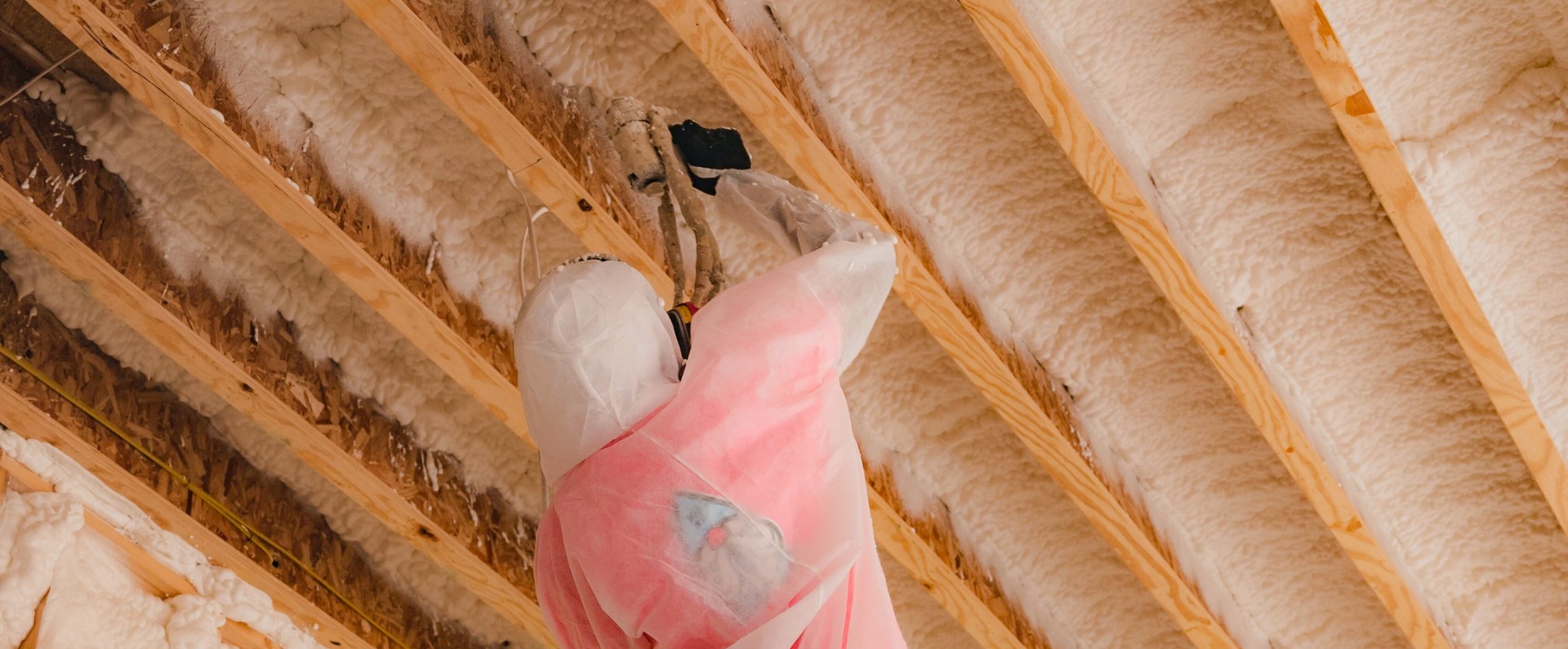
Installation planning accounts for the walls, roof assembly, framing, and any preparation identified during the assessment. When foam insulation is selected for a barn that houses animals, we provide ventilation and cure-timeline guidance before the animals return. After installation, we complete a final walkthrough to review the finished work.
Commercial Metal-Building Projects
Commercial projects require additional coordination around building operations, safety, inspections, and installation sequencing. We organize that work through defined project stages.
Our commercial insulation process includes:
- Operational discovery
- Material and sequence planning
- Project lead briefing and safety preparation
- Coordinated execution
- Internal quality audit
- Compliance and inspection coordination
- Final handover
This process accounts for how the facility operates and what inspectors may review before covered work is closed in.
-
STEPSchedule a Free AssessmentDuring your free in-home assessment, we’ll evaluate insulation levels and provide honest recommendations for improvement. We’ll leave you with a free estimate to know just what to expect, and we’ll answer all your questions.
-
STEPLet Our Team InstallThanks to our simple and easy installation process, your new insulation system will be installed before you know it! They’ll make sure to get the work done efficiently, accurately, and with minimal disruption to your daily routine.
-
STEPEnsure QualityWith the help of advanced testing techniques and proprietary technology, our team can accurately measure and diagnose insulation performance in any home, ensuring your new installation is working at its best and you’re free of other issues.
-
STEPCleanupBefore we leave, we’ll make sure to clean up any mess created during the installation process. We take pride in leaving our customers’ homes as clean as we found them.
-
STEPFinal InspectionTo finish off our service, we’ll conduct a final inspection to ensure your satisfaction with the installation process and the results. We want to make sure you’re getting the most out of your investment and feeling comfortable in your newly insulated space.


Matching Insulation to Metal Panels & Roof Assemblies
Material selection depends on the metal-building assembly, existing layers, condensation exposure, and surfaces available for installation. We assess each surface and the insulation already in place before recommending an approach. A barn and a commercial structure may require different materials even when both use metal panels.
Closed-Cell Foam
Closed-cell foam often works well for pole barns and metal buildings because it can adhere directly to suitable panels and structural members. It forms a continuous layer that seals gaps and can limit condensation on cold metal surfaces. Applied beneath a roof, it can address condensation drip at its source when the assembly and panel requirements allow.
This option is generally considered for pole-barn walls, metal wall panels, and other condensation-prone surfaces. It typically provides an R-value of about R-6.0 to R-7.0 per inch, although rated performance depends on the product. Open-cell foam is softer and more vapor-permeable, so moisture vapor passes through it more readily. It generally isn’t recommended for exposed metal panels or areas with condensation risk.
Batt & Blown-In Options
Batt insulation, blow-in cellulose, and blown-in blanket insulation may suit assemblies with appropriate framing or cavities. Material already in place, unsealed gaps, and preparation needs affect whether these options are practical. We determine where each proposed material belongs rather than treating the entire building as one uniform assembly.
What Affects Metal Building Insulation Costs?
A reliable estimate requires a project-specific assessment because cost depends on the structure and proposed scope, not dimensions alone.
Factors that can affect the estimate include:
- Roof and wall areas being insulated
- Selected insulation material
- Access to installation areas
- Surface preparation requirements
- Condition of installed insulation
- Drafts and condensation damage
- Intended use of the building
We provide free assessments for barns and metal buildings, along with free consultations for commercial insulation projects.
Get an Insulation Plan for Your Building
We can evaluate current conditions, explain the recommended scope, and plan the work around how you use the building. Project details can also be shared through our contact form.
Call (801) 928-7257 to request your free assessment or commercial consultation.
-
How Do I Know If My Home Needs New Insulation?
Here are several signs that your home may need new insulation:
- Frozen Pipes
- Uneaven Temperatures Throughout Your Home
- Cold Floors
- High Energy Bills
- Drafts Around Windows and Doors
- Ice dams
Finally, consider the age of your insulation:
- Batt/Fiberglass. Fiberglass insulation should last roughly 7-10 years.
- Cellulose. Blown-in cellulose should last roughly 10-15 years.
- Spray Foam. Spray foam should last 80-100 years, or the age of the house (as long as it was installed properly).
Our experts can provide an accurate assessment of the state of your home’s insulation. We'll consider your energy efficiency with state-of-the-art technology and years of industry know-how.
Give us a call to book your free consultation!
-
Why Use Spray Foam?
Spray foam has been rated to have the highest efficiency and R-value when compared to other insulation (like batt fiberglass).
Furthermore, spray foam's intuitive design allows it to create an airtight seal even in tricky and problematic spaces. It has been proven to keep out air pollutants and help soundproof buildings.
Visit our blog to learn about spray foam's benefits and why its a great choice for your home.
-
How Much Will My Installation Cost?
Prices vary from project to project. For an accurate assessment tailor-made to your home's needs, give our team a call today! You can also discover additional insights on why spray foam is worth the cost by visiting our blog.



Explore Our Family Of Brands