

If you're considering an attic insulation upgrade, one of the most common questions you'll face is:
Should I choose cellulose or fiberglass blown-in insulation?
Both materials can improve your home's energy efficiency, reduce HVAC strain, and make your living spaces more comfortable. However, they differ in cost, performance, moisture tolerance, installation characteristics, and long-term maintenance.
For homeowners throughout Charlotte, Huntersville, Cornelius, Davidson, Belmont, Gastonia, Concord, Kannapolis, and surrounding areas, understanding the differences can help you make the best investment for your home.
At iFOAM Charlotte, we regularly install blown-in insulation and help homeowners determine which option is best for their attic, budget, and energy-saving goals.
Why Attic Insulation Matters in North Carolina
Your attic is one of the largest sources of heat gain and heat loss in your home.
During North Carolina summers, attic temperatures can exceed 130°F, allowing heat to transfer into your living space. During winter, valuable conditioned air can escape through an under-insulated attic.
Proper thermal insulation helps:
- Lower energy bills
- Improve indoor comfort
- Reduce HVAC runtime
- Minimize temperature swings
- Increase home value
If you're searching for the best insulation for attic applications, blown-in insulation remains one of the most cost-effective upgrades available.
What Is Blown-In Fiberglass Insulation?
Blown-in fiberglass consists of tiny glass fibers that are mechanically blown into attic spaces to create a uniform blanket of insulation.
Benefits of Fiberglass Insulation
✅ Affordable installation cost
✅ Lightweight material
✅ Does not settle as much over time
✅ Moisture resistant
✅ Non-combustible
Fiberglass remains one of the most popular forms of home insulation because it provides excellent thermal performance at a competitive price.
Potential Drawbacks
- Air movement can reduce performance if attic air sealing is not addressed
- May require greater depth to achieve target R-values
- Does not naturally slow airflow as effectively as cellulose
What Is Blown-In Cellulose Insulation?
Cellulose insulation is typically manufactured from recycled paper products that are treated for fire resistance and pest resistance.
Benefits of Cellulose Insulation
✅ Dense coverage
✅ Excellent ability to fill gaps
✅ Environmentally friendly
✅ Good sound reduction
✅ Helps reduce air movement
Because cellulose is denser than fiberglass, it can sometimes help reduce small air leaks and improve overall attic performance.
Potential Drawbacks
- Can settle over time
- More susceptible to moisture issues if roof leaks occur
- Heavier than fiberglass
- May require maintenance or topping off in older installations
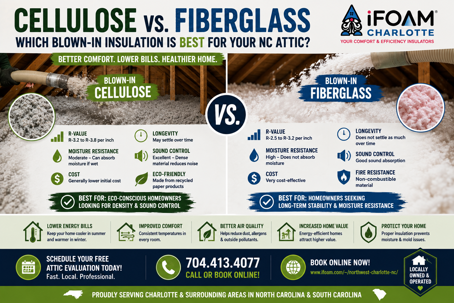
R-Value Comparison
R-value measures an insulation material's resistance to heat transfer.
Fiberglass
- Approximately R-2.5 to R-3.2 per inch
Cellulose
- Approximately R-3.2 to R-3.8 per inch
While cellulose often provides a slightly higher R-value per inch, the difference is usually less important than proper installation depth and coverage.
The real goal is achieving the recommended attic R-value for North Carolina homes.
Which Performs Better in North Carolina Attics?
North Carolina presents unique challenges:
- High humidity
- Hot summers
- Mild winters
- Significant cooling loads
For many Charlotte-area homes, blown-in fiberglass performs exceptionally well because:
- It resists moisture better
- It maintains loft over time
- It provides excellent thermal performance
- It requires less maintenance
Cellulose can also perform well when properly installed, particularly in homes where additional density and sound reduction are priorities.
Moisture Considerations
Moisture is one of the biggest factors when comparing cellulose and fiberglass.
Fiberglass
Fiberglass does not absorb water and generally dries more effectively if exposed to moisture.
Cellulose
Cellulose can absorb moisture, potentially leading to settling or reduced performance if leaks occur.
Because North Carolina experiences significant humidity throughout much of the year, moisture management should always be part of your insulation strategy.
Air Sealing Matters More Than Most Homeowners Realize
Many homeowners focus entirely on insulation thickness.
However, insulation works best when combined with air sealing.
Air sealing helps prevent:
- Hot attic air infiltration
- Conditioned air loss
- Drafts
- Excess HVAC workload
That's why many energy efficiency experts recommend addressing attic air leaks before adding insulation.
You may also enjoy:
Benefits of Air Sealing: Why Insulation Alone Isn't Enough
What About Spray Foam?
For homeowners seeking the highest level of attic performance, attic foam insulation may be worth considering.
Spray foam provides:
- Insulation
- Air sealing
- Moisture control
in a single product.
While spray foam insulation cost is typically higher than blown-in insulation, many homeowners choose it for conditioned attic applications and maximum energy efficiency.
When Should Insulation Be Removed?
In some cases, insulation removal may be recommended before installing new insulation.
Common reasons include:
- Rodent contamination
- Water damage
- Mold concerns
- Severe settling
- Damaged insulation
A professional inspection can determine whether your attic requires removal or simply a top-off.
So Which Is Better?
For most homeowners, the answer depends on priorities.
Fiberglass Is Often Best If You Want:
✔ Lower installation cost
✔ Long-term stability
✔ Moisture resistance
✔ Minimal maintenance
Cellulose May Be Best If You Want:
✔ Higher density
✔ Improved sound control
✔ Slightly higher R-value per inch
✔ Recycled materials
Both options can dramatically improve comfort and energy efficiency when installed correctly.
Why Choose iFOAM Charlotte?
Although iFOAM is a nationally recognized brand, iFOAM Charlotte is proudly locally owned and operated.
We understand the climate, humidity, and insulation challenges unique to North Carolina homes.
Our services include:
✔ Blown-In Fiberglass Insulation
✔ Attic Insulation Upgrades
✔ Attic Foam Insulation
✔ Spray Foam Insulation
✔ Insulation Removal
✔ Insulation for the Walls
✔ Encapsulation Crawl Space Services
✔ Energy Efficient Insulation Solutions
📞 704.413.4077
🌐 https://www.ifoam.com/~/northwest-charlotte-nc/
Schedule your free attic evaluation today.
Frequently Asked Questions
Is cellulose better than fiberglass insulation?
Not necessarily. Cellulose offers greater density and slightly higher R-value per inch, while fiberglass typically provides better moisture resistance and long-term stability.
Which insulation lasts longer?
Fiberglass generally settles less over time and often requires less maintenance than cellulose.
What is the best insulation for attic applications?
The best insulation depends on your goals, attic condition, and budget. Fiberglass, cellulose, and spray foam can all perform well when properly installed.
Is blown-in insulation worth it?
Yes. Adding attic insulation is one of the most cost-effective ways to improve energy efficiency and comfort.
Can insulation lower my electric bill?
Proper attic insulation can reduce heat transfer, helping HVAC systems operate more efficiently and lowering cooling costs.
Should I remove old insulation before adding new insulation?
Not always. Many attics can be topped off successfully. However, insulation removal may be necessary if contamination or damage is present.
Recommended Articles
- Blown-In Attic Top-Off: The Fastest Way to Cut Your Cooling Bill This Summer
- Best Insulation for Attics in North Carolina Homes
- How Much Insulation Do You Need? R-Value Explained in Simple Terms
- Why Your Upstairs Is Hot and How Insulation Fixes It
- Benefits of Air Sealing: Why Insulation Alone Isn't Enough
- Duke Energy Home Energy Improvement Rebates
- Code Requirements for Insulation in North Carolina (2026 Guide)